Full Face Mountain Bike Helmet After Jaw Surgery: Why I Ride the Fox Proframe
By Blake Hickey, founder of Double Jaw Marketing and a jaw surgery patient. For riders after jaw surgery, and for the oral surgery and orthodontic offices whose patients ask, "When can I ride again?" Updated October 25, 2026.
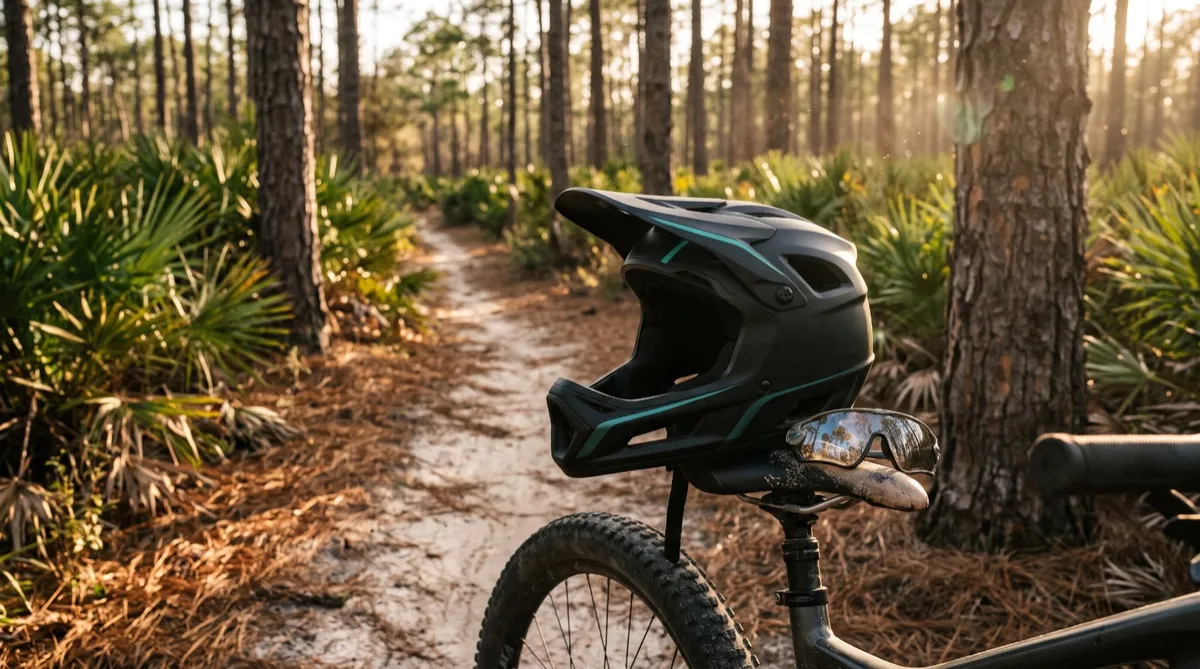
I grew up competing in BMX. As I got older I rode mountain bikes more and more, and now I ride a lot of the bike parks around Florida. I've met a lot of good people there. After my jaw surgery, I switched to a full face helmet, and the Fox Proframe is the one I ride.
At the trails, other riders ask me why I wear a full face. My answer is simple: safety, and confidence after jaw surgery. I don't want to bash my jaw, and I don't want to go back through any of that. I've also had friends go through serious brain injuries, and some who passed away. So here's the point of this whole post up front: wear a helmet.
Ask your surgeon when it's safe to get back on the bike, and whether a helmet will press on anything that's still healing. This is one rider's experience, not medical or safety advice. I'm not sponsored and I don't make a commission on any helmet here.
Why fit comes first after jaw surgery
After surgery, my face changed week to week. Some days it was swollen and some days it wasn't, and my surgeon's team expected it to settle over months. A full face helmet sits right on the cheeks and jaw, so fit and comfort became my first filter, ahead of looks or price. I bought four helmets, wore them around the house, rode in them and returned the ones I didn't keep.
The four full face helmets I tried
All four had MIPS, a rotational impact system, though not all the same version. This is how each one felt on my head, on Florida trails, in Florida heat.
How I'd pick a full face helmet after jaw surgery
- Get cleared first. Your surgeon decides when you're ready to ride, not the calendar and not me.
- Look for swappable cheek pads. Your face may change for months. Pads let the fit change with it.
- Snug, not tight, at the jaw. Pads that are too thin feel airy but won't hold your cheeks if you go down. Pads that press on a healing jaw are a problem. Try it on and ask your surgeon if you're unsure.
- Airflow if you ride somewhere hot. In Florida, I'll take vents over extra padding. I wear sunglasses, not goggles.
- Be patient with sizing. My head sits between sizes, so I ordered two of some helmets and returned the one that didn't fit.
A helmet that fits and feels good gets worn. One you like lets you ride longer and get more sessions in.
The rest of my helmets
For BMX, I ride a Pro-Tec and love it. I keep separate helmets for my road bike and my cruiser. The cruiser is my fishing bike, with a bait tank and an aerator on it. Different bikes, same rule: helmet on, every ride.
The Double Jaw Method angle: answer the life-after-surgery questions
Your patients have lives outside the chair. Riders, surfers, lifters and parents all leave the consult with the same question: when can I get back to it? Here's how that question fits the two jaws of the Double Jaw Method.
Top jaw: know who you're talking to
Ask about hobbies at the consult and note them. A patient who rides, surfs or plays a contact sport has questions the standard post-op sheet doesn't answer. Those questions are your content ideas.
Bottom jaw: answer it where they look
Put a short "back to activity" answer on your website in your surgeon's own words, with your timeline and a helmet reminder. Text the link at the right point in recovery, so your team sends one answer instead of retyping it on every call.
Want help building that for your office? It starts with a free 15-minute Method Review.
Questions riders ask
Can you wear a full face helmet after jaw surgery?
I do, once my surgeon cleared me to ride. Ask yours before you put one on, since a full face helmet sits on the cheeks and jaw.
When can I ride a mountain bike after jaw surgery?
That depends on your surgery and how you're healing, so your surgeon is the one to ask. I didn't ride until I was cleared.
Which full face helmet did you pick?
The Fox Proframe. For riding in Florida heat, its airflow and swappable cheek pads made it my pick. The Smith Mainline felt the most comfortable but ran hot for me.
Why wear a full face instead of a half shell?
For me it's safety and confidence. After jaw surgery, I don't want to hit my jaw and go back through recovery.
Source: helmet notes come from Blake's own video testing all four helmets on Florida trails. Not sponsored.